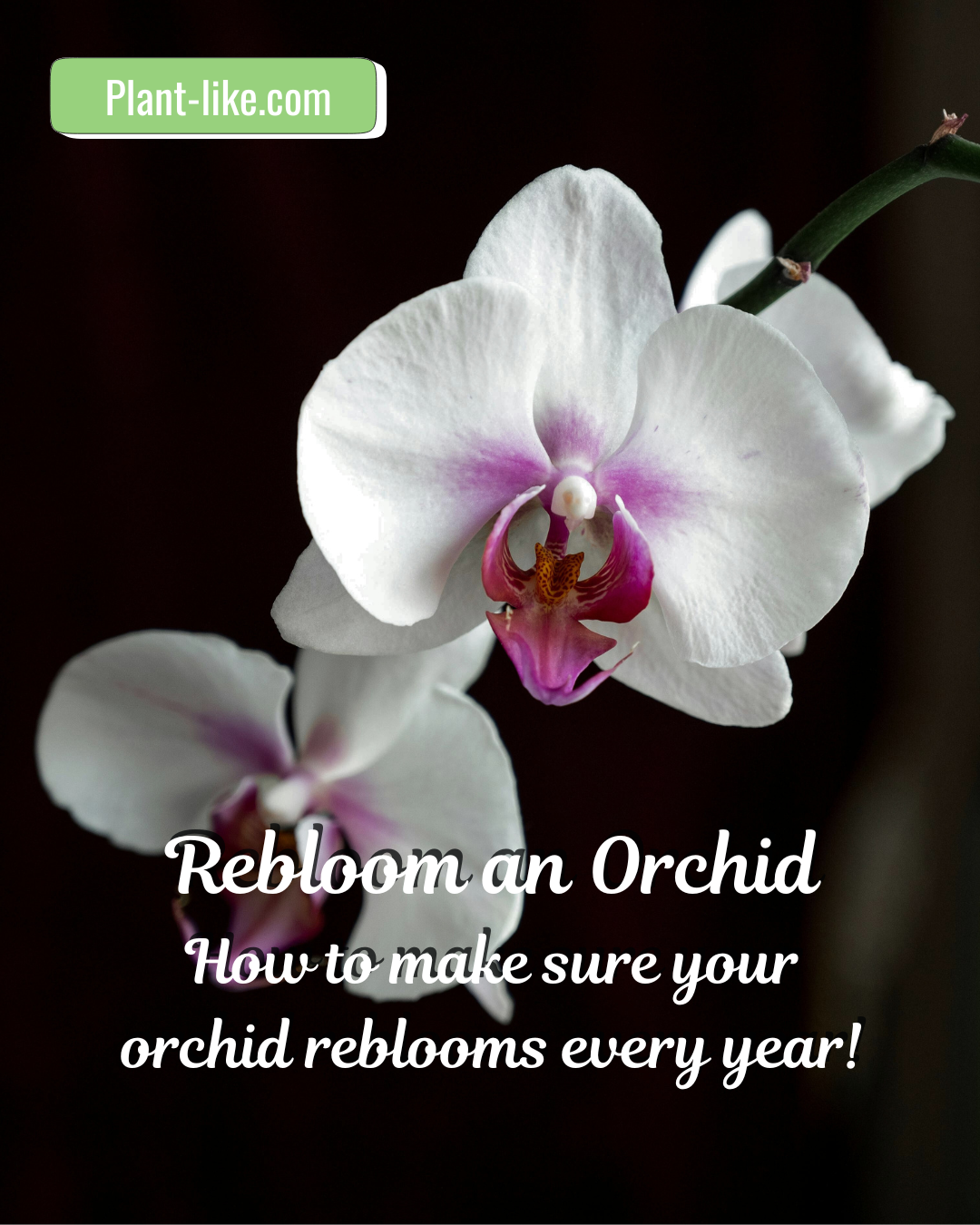
That grocery store plant isn’t dead—it’s resting. Most people miss the one crucial thing orchids need to rebloom.

Maybe you’ve had your orchid for years. The leaves are green and firm, the roots look healthy, it even pushes out a new leaf now and then—but it hasn’t bloomed since you brought it home. Or maybe you just watched your holiday gift orchid drop its last flower and you’re wondering if that’s it, if you should toss the whole thing and buy fresh next December. Either way, if you want to rebloom an orchid, you need to understand what actually triggers flowering. Because the plant isn’t dead or even unhappy. It’s waiting for signals that most homes don’t provide.
This is the thing about orchids that nobody explains at the grocery store checkout: they’re perennials. The same plant can bloom every year for two decades or more. But unlike most houseplants, orchids don’t just flower when they’re healthy. They flower when specific environmental conditions tell them it’s time. Without those conditions, a perfectly healthy orchid will sit there indefinitely, growing leaves and roots but never producing a spike. I’ve talked to people who’ve kept their orchids alive for five, six, seven years without a single bloom—not because they were doing anything wrong with watering or potting, but because the plant never got its seasonal cue.
The good news is that once you know what that cue is, it’s surprisingly easy to provide.
The Temperature Trigger Most People Miss

The single biggest reason healthy orchids never rebloom is temperature—specifically, the lack of a nighttime temperature drop. In their native habitats, orchids experience cooler nights that signal the shift from vegetative growth to flowering. For Phalaenopsis (the moth orchid that dominates grocery stores) and many other common varieties, that means nighttime temperatures between 55 and 65°F for about three to four weeks. This is the switch that tells the plant autumn has arrived and it’s time to start producing a flower spike.
Most homes stay a steady 68 to 72°F around the clock. That’s comfortable for humans, but it’s confusingly stable for an orchid waiting for the seasons to change. The plant keeps growing leaves and roots—which is fine, it’s healthy—but it never gets the environmental cue to bloom. This is how you end up with an orchid that looks great and hasn’t flowered in years. The plant isn’t struggling. It just thinks it’s perpetual summer.
The fix is simpler than you’d think. In fall, move your orchid to a spot where it experiences that temperature differential. A room you don’t heat at night works well. So does a spot near a window that gets cool (not freezing) after dark—just make sure the leaves aren’t touching cold glass. Some people set their orchids on an enclosed porch or near a drafty window for a few weeks in September or October. You’re not trying to freeze the plant. You’re mimicking the natural drop between warm days and cool nights that happens in tropical climates where orchids grow wild.
Once you see a new spike emerging—a smooth, green shoot with a pointed tip, distinct from the rounder shape of a new root—you can move the plant back to its normal spot and resume regular care. The spike will continue developing as long as conditions stay reasonably stable. For people who’ve been waiting years for their orchid to do something, this temperature trick alone often solves the mystery within one season.
Why Light Is the Other Half of the Equation

Temperature gets the spike started, but light determines whether your orchid has enough energy to produce flowers in the first place. This is the second major reason orchids go years without blooming: they’re not getting nearly enough light, even though they look perfectly healthy.
Orchids have a reputation for being low-light plants, and compared to something like a succulent, they are. But “low light” in orchid terms still means bright indirect light for most of the day. The dark corner of your living room doesn’t qualify. Neither does a north-facing window in winter. When an orchid doesn’t get enough light, it survives—the leaves stay green, the roots keep growing—but it never builds up the energy reserves needed to flower. The plant looks fine. It’s just running on empty.
The sweet spot for most orchids is an east-facing window, where they get gentle morning sun, or a south or west window with a sheer curtain diffusing the harshest rays. You want bright but not scorching. If the leaves turn dark green, that’s actually a sign of insufficient light—counterintuitive, but true. Orchid leaves should be a lighter, almost grassy green when they’re getting optimal exposure. Yellowish or red-tinged leaves mean too much direct sun.
During winter months, when days are short and light is weak, you might need to move your orchid closer to the window or supplement with a grow light. Orchids need around 10 to 14 hours of light daily to support blooming, and a dim winter windowsill often falls short. A simple LED grow light positioned about a foot above the plant can make the difference between a spike and another flowerless year. If your orchid has been healthy but bloomless for a long time, inadequate light is one of the first things to investigate.
The Banana Water Method

Long before TikTok discovered it, home orchid growers in Latin America and Southeast Asia have used banana water to encourage blooming. The method is simple: soak banana peels in water for a few days, dilute the resulting liquid, and use it to water your orchids. The peels release potassium, phosphorus, and calcium into the water—all nutrients that support flower production.
I learned this from an 84-year-old Mexican grandmother whose orchids bloom like clockwork, and I’ve used it myself with good results. There’s nothing mysterious about why it works. Potassium plays a direct role in flower formation, and orchids in bark-based potting mixes can always use the extra nutrients. Commercial orchid fertilizers contain the same elements; banana water is just a gentler, slower-release version that’s been working in kitchen windowsills for generations.
To make it, cut up two or three banana peels and put them in a jar with a few cups of water. Let it sit for a couple of days—some people go up to a week—then strain out the peels. Dilute the liquid about 1 part banana water to 5 parts regular water before using. You can water your orchid with this solution every couple of weeks during the growing season.
Some people dry banana peels, grind them into powder, and sprinkle it on the potting medium for a slow-release approach. Others bury small pieces of dried peel in the bark. All of these methods are getting potassium to the roots. The banana water version is just the most convenient if you’re already eating bananas and want to put the peels to use.
Will banana water alone make a stubborn orchid bloom? Probably not, if the temperature and light aren’t there. But as part of an overall care routine, it provides a nutrient boost that supports flowering—and it costs nothing. This is practical folk knowledge that’s been passed down because it works.
What to Do With the Spent Spike

Once the flowers drop, you’re left with that bare green or browning stem, and what you do next affects how quickly your orchid rebounds. You have two options, and both are valid—they just serve different goals.
If the spike is still green and firm, you can cut it just above a node (one of those little bumps along the stem) to encourage a secondary bloom. The plant may push out a smaller branch from that node and produce a few more flowers within a couple of months. This is faster, but the blooms tend to be fewer and smaller than the original flush because the plant is drawing on existing energy reserves rather than fully recharging.
If you want the strongest possible rebloom next season, cut the spike all the way down to about an inch above the base of the plant. This tells the orchid to stop investing in the old spike and redirect everything toward root and leaf growth. It takes longer—you’re looking at an 8 to 12 month cycle before the next flowers—but the payoff is a more robust spike with more blooms.
When the spike turns yellow or brown, the decision is made for you. A dying spike isn’t going to produce secondary blooms, so cut it at the base and let the plant rest. Use clean, sharp scissors or pruning shears, and if you’re paranoid about infection (orchids can be susceptible to bacterial and fungal issues), wipe the blade with rubbing alcohol first.
Reading the Signs of a Healthy Resting Orchid

A flowerless orchid can look sad, but there are clear indicators that the plant is doing fine and just needs time—or needs you to adjust its environment. Knowing what to look for keeps you from panicking or, worse, overwatering in an attempt to “help.”
Healthy leaves are firm and green, not wrinkled, yellowing, or floppy. Some slight wrinkling can happen if the plant is underwatered or the roots are struggling, but plump leaves mean the orchid is hydrated and photosynthesizing normally. A new leaf emerging from the center crown is a great sign—it means the plant is actively growing and will have more surface area to fuel future blooms.
Root tips are another giveaway. Orchid roots should be silvery-green when dry and bright green when wet. If you see new root tips—those little neon green or reddish points poking out—your orchid is healthy and growing. Mushy brown roots, on the other hand, indicate overwatering or a medium that’s broken down and holding too much moisture. Healthy roots are firm and plump, even when dry.
If your orchid has been healthy-looking for years without blooming, the plant itself isn’t the problem. Leaves and roots tell you the orchid is alive and doing its job. Flowering is the part that requires specific triggers, and that’s where temperature and light come in.
The Realistic Timeline for Getting an Orchid to Rebloom
Patience is non-negotiable with orchids. If you’re used to annuals that flower continuously all summer or houseplants that bounce back in a few weeks, the orchid timeline can feel glacial. But once you adjust your expectations, it’s actually pretty low-maintenance—you’re just waiting, not constantly intervening.
Most orchids operate on a roughly annual cycle. After blooming, they enter a rest period that can last six to nine months. During this time, the plant grows new leaves and roots, stores energy, and eventually—when triggered by the right temperature and light conditions—produces a new flower spike. The spike itself takes another two to three months to develop and open fully.
So from the day your orchid drops its last flower to the day it’s in full bloom again, you’re looking at anywhere from 8 to 14 months depending on the variety and conditions. Phalaenopsis tend toward the faster end, some Dendrobiums and Cattleyas on the slower end. This is normal. An orchid that hasn’t bloomed in three, four, five years isn’t following its natural cycle—it’s missing something in its environment, usually the temperature drop or adequate light.
The Sill’s 2026 plant trend report noted that orchid reblooming has become a point of pride among houseplant owners, with more people celebrating their rebloom wins and getting hooked on the slow satisfaction of coaxing flowers from the same plant year after year. There’s something genuinely rewarding about it. You’re not buying new blooms—you’re growing them.
Making It Work Long-Term

Once you’ve successfully gotten your orchid to rebloom, the process gets easier. You know what conditions your specific plant responds to, you’ve learned to read its signals, and you’ve accepted the timeline. The same principles apply every year: give it a temperature drop in fall, make sure it’s getting enough light, keep up with the banana water or your preferred fertilizer during growing season, and be patient.
Every few years, you’ll want to repot into fresh medium—orchid bark breaks down over time and holds too much moisture, which leads to root rot. Spring, right after blooming, is the best time to repot. Choose a pot only slightly larger than the current one (orchids like being a bit snug), and use a chunky orchid mix that drains fast.
That’s really it. The orchid that hasn’t bloomed in years might just need one fall spent in a cooler room to finally spike. The grocery store plant you almost threw away can become a twenty-year companion that blooms reliably every winter. You just have to meet the plant where it is instead of expecting it to behave like the cut flowers it resembles. Orchids aren’t disposable. They’re perennials in disguise, and once you understand that, everything else falls into place.
Have you gotten a stubborn orchid to finally rebloom? I’d love to hear what worked for you—especially if you’ve got family wisdom to share. Drop a comment below.
If you’re enjoying my content, consider following and joining my mailing list. I love connecting with other Plant-like folks!
A quick note: This blog is sometimes supported by Amazon affiliate links. If you click through and buy any of the linked products, I get a small commission at no extra cost to you—this small token helps me keep the blog running and providing awesome content. I only recommend things I’ve tried myself and that I genuinely think are worth your time.
Leave a Reply